About the author

Stanley H. ChanProfessor of Electrical and Computer Engineering, Purdue University


Friends and visitors, I am Stanley Chan. I am a Professor at Purdue University, West Lafayette, United States. My area is Electrical Engineering. I teach, advise students, and run a research group on computational imaging, where we build intelligent cameras that can see in the hard conditions from near-darkness to turbulent air.
I teach probability and machine learning frequently at Purdue, and this book grew straight out of that classroom. If it helps you, or if you catch a mistake, I'd genuinely love to hear from you.
Why a free textbook?
This book is free for everyone around the world.
You may download a free PDF copy from the download page. If you want a hard copy, you can purchase one from the publisher at a discounted price to cover the printing cost.
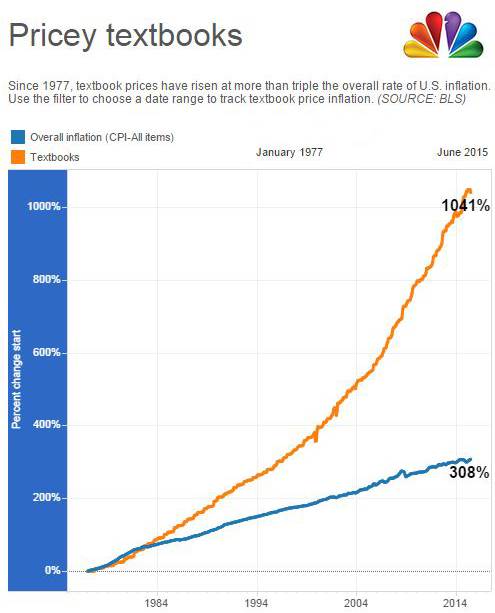
Some people ask how much money I make from this book. The answer is zero — not a single penny goes to my pocket. Why? Textbooks today are just ridiculously expensive, and I want to slow down the trend. Education should be accessible to as many people as possible, especially to those from underprivileged families. To accomplish this, I have minimized all expensive editorial and marketing services — so I need your help to promote the book, and to tell me if you spot an editorial error.
Why another probability textbook?
As I wrote this book, I did a fairly exhaustive search of the available textbooks on the subject. From the tsunami of data science books, there are essentially two categories.
The first type are written for programmers. They emphasize processing data by calling standard or customized libraries for various statistical tasks. Theories are explained at a high level — a reference point rather than a deep dive. These books matter, but many people, especially college students, need more solid mathematical training to solve harder problems.
The other type are classical probability textbooks written for mathematicians. While mathematically rigorous, most students are not interested in reading them page by page. Why? They can be boring — it is easy to get lost in the theorems, and the theorems are not directly connected to practical engineering problems. As a faculty member at Purdue, I heard these comments time and again:
- Why should we learn probability?
- How can flipping a coin be useful in modern data science?
- Why is correlation the expectation of a product of random variables?
- Why does the Gaussian have a bell shape?
- How do we fit data with a line?
- How do we tell whether a change is statistically significant?
Between the two ends of this spectrum lies a gap. We need a book that balances theory and practice — one that provides insights, not just theorems and proofs; that motivates students by telling them why probability is essential to their work; and that highlights the impact of the subject. I put the book in the context of data science to emphasize the inseparability of data (computing) and probability (theory) in our time.
Unique features of this book
- 🌐Broad coverage — from classical probability theory to modern data analytic techniques.
- 📐Geometric intuition — geometric and pictorial explanations of concepts.
- 💻Code integration — tight integration with MATLAB and Python.
- 🤖Real applications — practical applications in machine learning.
What people say
Researchers and educators in machine learning, signal processing, and statistics have written about the book. Read all 14 reviews →